A good quote sent next week loses to a decent one sent tomorrow
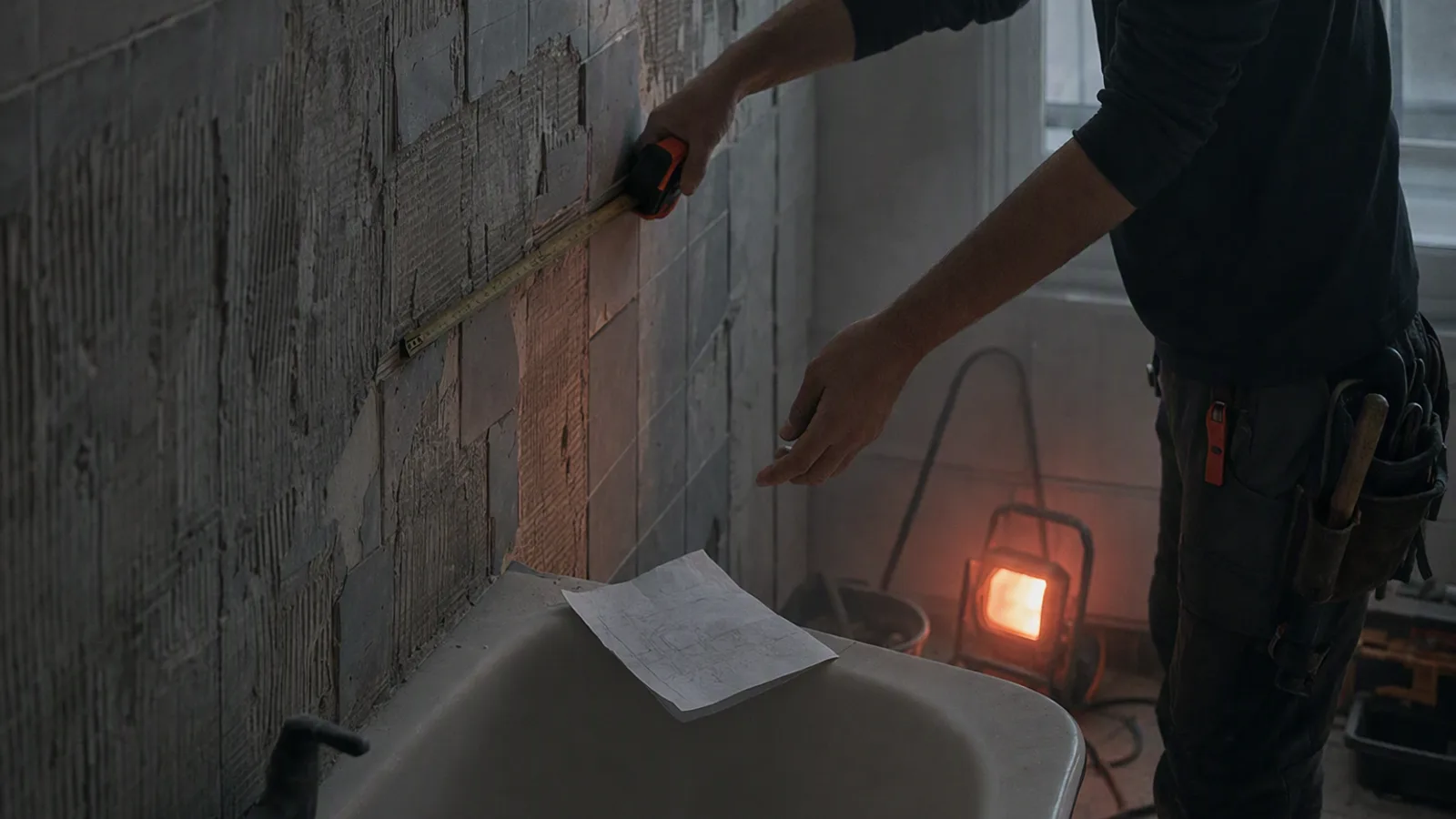
The site visit was on Tuesday. The measurements are on the back of a supplier’s delivery note, there are six photos of the bathroom on your phone, and the customer finished by asking the question every customer asks: can you send me a price? You said by the end of the week, and you meant it.
Then Thursday’s job overran, Friday went on catching up, and the quote got written on Sunday evening at the kitchen table. It was a good quote. By the time it arrived the customer had two others and had already booked the firm that answered on Wednesday — not the cheapest, just the first one that looked as if it knew what it was doing.
Why a quote takes an evening
The number is the quick part. Everything around it is what pushes the quote to the weekend.
The information is scattered. The measurements are on paper, the photos are on a phone, the detail about the radiator came up on a call nobody wrote down, and the email thread has a “one more thing” at the bottom.
The price comes from memory. What did you charge for the similar bathroom last spring? The answer is in an old invoice somewhere, or in your head, adjusted for how that job went.
The scope has to be written. Not the total — the words around it: what is included, what is not, and what happens if the wall behind the old tiles turns out to need rebuilding. That is what prevents the argument later, and it needs a concentration nobody has at ten at night.
So the quote waits for a quiet evening, and a small firm does not get many of those.
What the delay actually costs
A customer choosing a tradesperson cannot judge the quality of the work in advance. They judge what they can see: how quickly and how clearly you answered. A quote that arrives the next day says the firm turns up when it says it will. A quote that arrives after a week says something too, whatever the price on it.
There is a cost on your side as well. A quote written five days after the visit comes from a memory with four other jobs piled on top of it. Details get missed, so the price is either padded to cover what you are unsure of, which loses the work, or too thin, which loses the margin as soon as the job starts.
Faster is not the same as rushed
The answer is not writing faster at night. It is taking away the parts of the quote that do not need you.
Gathering what was said, measured and photographed does not need you. Neither does finding the three most similar jobs you have done and what you charged for them, or writing the parts of the scope that are the same on every bathroom.
What needs you is judgment: whether this job really is like the last one, where the risk is, and what the right price is. A draft built from the enquiry thread, the photos and the measurement note, priced against your own previous work with the comparison shown next to it, turns an evening of writing into a few minutes of checking. You correct it, you approve it, and it goes the same day. Nothing reaches the customer until you have read it.
What a quote needs to survive the job
Speed only helps if the quote holds up once the work starts.
The scope in the customer’s words. What will be done, in words that somebody outside the trade understands.
What is not included. Taking out the old fittings, making good, the skip, parking.
What could change the price. The unknown behind the wall, and the rule for what happens if you find it.
How long the price holds. Material prices move, and a quote with no date on it is a promise with no end.
How payment works. Deposit, stages, when the invoice comes. Agreed now, it is a formality. Raised later, it is a negotiation.
None of it is clever. It is simply what gets skipped at ten at night.
The test
Look at your last five quotes and count the days between the site visit and the moment each one was sent. Then ask on how many of those days somebody was actually working on it.
Usually it is one evening, and the rest is waiting. The waiting is what loses the work.
- quotes
- sales
- enquiries
- small business